Cowboy Hall Of Fame To Celebrate Inductees, Saddle Of Honor Awardee
Montana Cowboy Hall of Fame to celebrate 2026 inductees and Saddle of Honor Awardee Feb. 14 in Great Falls The Montana Cowboy Hall of Fame will celebrate the 18th class of inductions into the Montana Cowboy Hall of Fame Saturday, Feb. 14, at the Heritage Inn in Great Falls. The inductees were chosen from a field of candidates nominated by the general public. Inductees will be recognized for their contributions to the history and culture of the state of Montana.
Now is the time to register for the Inductee Recognition Ceremony Brunch, which begins at 10:30 a.m. to celebrate the accomplishments and lasting legacies of the inductees to the Montana Cowboy Hall of Fame Class of 2026. Pre-registration is $35 per person. Call to reserve your seat. Nomination criteria established by the board for the Class of 2026 inductions allowed the election of one Living Inductee and one Legacy Inductee from each of the MCHF 12 districts.
The 2026 inductees into the Montana Cowboy Hall of Fame are: District 1 (Daniels, Phillips, Roosevelt, Sheridan and Valley counties): Living: Betty Lorraine (Blair) Steele of Malta; Legacy: William C. “Billy” Knorr of Wolf Point.
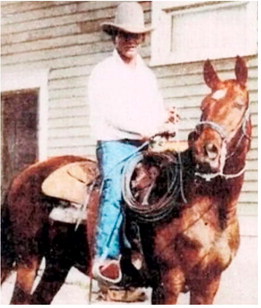
William “Billy” Knorr
William C. “Billy” Knorr was born on Jan. 21, 1885, in Poplar, to Phillip and Elizabeth (Hatch) Knorr. Billy’s father, Phillip Knorr, was a U.S. Army Union Soldier in the Civil War who after his service, moved west and ended up in Montana meeting Billy’s mother, Elizabeth, who was Assiniboine. Phillip leased a homestead, and had his own horses Billy loved while growing up.
In 1893, Billy was one of the first students to attend the Fort Peck Government School when it first opened in Poplar. However, being in a classroom didn’t work out well for Billy. He loved riding on the long cattle trails and drives, as well as being outdoors more than being in a classroom all day. In 1901 at the age of 16, Billy took his first job. He was hired by the Fort Peck Tribes as a line rider for Indian owned livestock. He was employed for two years, until in 1903, at the age of 18, he accepted an offer from Major Scobey to work in law enforcement. Billy was the youngest policeman ever to serve under Scobey, achieving three years of service.
Knorr organized the 1st Flynn Creek Celebration in 1903, which became known as the Red Bottom Powwow Celebration held every June in Frazer.
In 1906, Billy married his true love, Nancy Mitchell (granddaughter of Col. David Dawson Mitchell) and settled at Frontier east of Wolf Point, Montana. A few years later in 1909, a baby girl named Audrey Lizabeth was born to this union, bringing them great joy.
In the summer of 1920, Knorr and his good friend, Alva Kellogg, attended the Havre Celebration. On their drive home Billy told Kellogg he thought they could put on a bigger and better show in Wolf Point than they did in Havre (Montana). Kellogg agreed and told Billy to get started with plans. Billy recounted the story not only to family members, but also many years later in an interview with the Culbertson Searchlight newspaper as well.
Thus, in 1921, the Granddaddy of Montana Rodeo also known as the Wolf Point Wild Horse Stampede was born. Billy and Alvah served as committee members along with Joshua Wetsit, Ray Mitchell and Charles Hall. The biggest crowd Wolf Point had ever seen turned out to attend. At the Stampede, Billy said he wanted to show people Indians could rodeo too. The Wolf Point Commercial Club was so pleased with the record crowds that they decided to make it an annual event.
In 1922, Billy and Nancy adopted a daughter named Irene. Later that year, he was elected President of the Indian Welfare Association which was a council of Fort Peck Indian Farmers and Ranchers. Billy also served on the Fort Peck Indian Fair Association and helped organize the fair for a few years.
In the late 1920s, Knorr owned 50 head of horses and sixty head of Black Angus cattle. A true cowboy through and through, he also worked for a dozen or more cattle ranches including the Mann Simmons cattle outfit of Hinsdale, the Jim Spencer cattle outfit south of the Bears Paw Mountains, and the well-known Frye and Company Cattle Units on the Fort Peck Indian Reservation. He also rode with the Valley County Horse Roundup.
In 1932, Knorr entered politics and was elected as a Wolf Point (city) commissioner and to the Fort Peck Assiniboine General Council. He was a delegate for the Assiniboines many times, and lobbied for improvements, rights, and claims during meetings with government officials in various places including Spokane, Washington, and Washington D.C.
When the Second World War broke out, Knorr assisted with the Hansen Packing Company and packaged meat to send to the soldiers overseas fighting for the United States. He believed in community and helping wherever and whenever he could. He had then, what we now call the “git-er-done” cowboy spirit.
When his brother died, and his wife having passed as well, he raised his nephews and nieces as his own. In 1947, Billy was elected as the vice chairman of the Fort Peck Assiniboine and Sioux Tribes and once again served as a delegate for the tribes.
In 1950, he went back to law enforcement for a short time, due to the fact that in 1951 he was elected Chairman of the Fort Peck Tribes. While serving in this position, Billy and the tribal council accomplished numerous undertakings which included the organization of the first Oil Discovery Celebration recognizing the oil boom which had boosted the area economy. The celebration was the largest in the region for many years and later became Poplar Indian Days Powwow which is held in Poplar to this day. With the establishment of the 2nd Constitution and By Laws of the Tribes, Billy was delegated to Washington D.C., representing the Tribes for the final time, before leaving that elected office.
In 1961, Knorr was again voted in as a Wolf Point commissioner and was also an interpreter for the Assiniboines. From 1960 to 1964, he served on the Fort Peck Tribes Enrollment Committee.
In total, he committed 20 years of his life, time and knowledge with the Fort Peck Tribal Executive Board.
On Oct. 22, 1968, he died and was laid to rest at the King Memorial Cemetery in Wolf Point.
He accomplished great things that others only wish to do. He was greatly admired and respected by many for his character. Billy was a true cowboy, lawman, politician and horseman.