First West Nile Positive Mosquitoes Confirmed In County During 2026
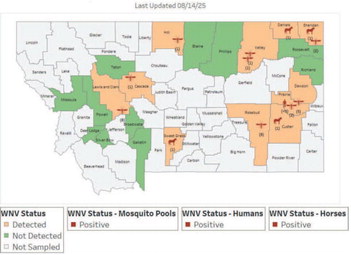
The Roosevelt County Health Department confi rmed the first mosquito pool testing positive for West Nile virus in Roosevelt County was identifi ed west of Froid from a July 26, sample. WNV is spread by mosquitoes and can potentially lead to serious illness in people. Mosquitoes get the virus when they bite an infected bird. People and animals are infected when an infected mosquito bites them. Most cases of human illness are reported during summer and fall months when mosquitoes are more active.
Since WNV came into the picture in Montana in 2002, the eastern Montana landscape has seen this virus in varied degrees nearly each season. Roosevelt County Health Department director Jenny Fuller is quoted as reflecting that, “Each year, our wild prairie sees a whole roster of health risks and dangers. West Nile virus is one of our perennial summer threats. It is this positive detection that should remind us to take precautions for ourselves and our families and vaccinate our horses.”
Most people (80 percent) infected with WNV do not show symptoms and may never know they were infected. Some people (20 percent) may develop a fever with a headache, body aches, joint pain, vomiting, diarrhea or a rash. These symptoms usually occur within two weeks after being bitten by an infected mosquito.
Less than 1 percent of people who are infected develop severe illness that affects the central nervous system, such as encephalitis (inflammation of the brain) or meningitis (membranes that surround the brain and spinal cord); requires hospitalization; or results in death. Anyone can develop mild or severe illness. However, risk of severe illness increases with age or if you have a chronic medical condition (such as cancer, diabetes, high blood pressure, or kidney disease) or a weakened immune system due to a health condition or medication.
There is no licensed vaccine to prevent or medicines to treat WNV disease in humans. However, there are many steps people can take to help keep their families and communities safer and healthier.
This WNV season, take extra effort to drain standing water, dress safely, use DEET based repellents and use all preventative tools available when working outside at peak mosquito hours. Visit https://www.cdc.gov/ west-nile-virus/ for more information on mosquito and WNV prevention or call our Roosevelt County Health Department at 406-653-6223.