Candidates Seek House Spot
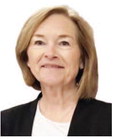
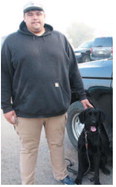
Republican incumbent Valerie Moore and Democrat Tess Fahlgren are seeking the representative position for House District 29.
The district includes Scobey, Glasgow, Flaxville, Outlook, Plentywood, Medicine Lake and Froid.
Election day is Tuesday, Nov. 3. Mail-in ballots will be sent out on Friday, Oct. 9.
Candidates answered the following questions from this newspaper.
1. What are voters telling you are their main concerns in this election?
Moore: Voters, surprisingly, talk to me more about federal issues than they do state issues. Obviously, I have no control over them, but there are issues that certainly come to mind that I expect will be hot topics in the next session. Data centers are a huge topic and on everyone’s mind. Followed by Artificial Intelligence and if and how to regulate. Property tax reforms in 2025, how they worked and how they can be tweaked. Montana’s economy is growing, but people are feeling a pinch at the pumps and the grocery store, and we need to be mindful.
Fahlgren: People are afraid of what funding cuts will do to rural healthcare, and for good reason. New federal policies cut funding for Medicaid, an essential program for rural hospitals to stay open and fully functional. Republicans in the state legislature would like to see Medicaid cut even further.
2. What do you feel the Montana Legislature can do to help residents?
Moore: Personally, I feel
as a legislator the best way I can help them is by keeping them informed and making myself available to listen to their concerns and issues. My phone number and email are readily available to my constituents, and I encourage them to reach out anytime. The legislature, as a whole, needs to stay out of the way of progress by not over regulating, keep the job market strong and work together for the greater good.
Fahlgren: When my mother-in-law recently passed away, I experienced first-hand how little funding there is for endof- life care. The legislature needs to support essential services and make it possible to comfortably live out our days in this place we call home.
3. What do you think of the governor’s proposal to implement a flat tax in Montana?
Moore: I am always willing to look at any tax cut. I would need to confi rm it can work while still allowing us to keep our hospitals, nursing homes and schools running adequately. We might consider having some triggers that make the cut as long as it cash flows. We don’t want to be like D.C. So, yes, as long as it cash flows, I can support a lower tax rate.
Fahlgren: I am against the flat tax proposal. It would mean $130 million less in the state budget every year by 2029. The vast majority of northeastern Montanans’ tax rates would not be lowered, but our schools, hospitals, roads, and more could be severely affected. This change would not help northeastern Montana, it would only benefit Gianforte and his rich friends.
4. Do you feel you can work with people across the aisle on some legislation?
Moore: I have a very good relationship with my colleagues across the aisle. I owe it to my constituents to listen to any proposed legislation and see if it could help them regardless of where it was initiated.
Fahlgren: Having grown up in northeastern Montana, I have plenty of practice making friends and working alongside folks with different views. The Democrat vs. Republican division has changed a lot in recent years, with the Republican party splitting between Trump loyalists and more traditional Republicans. At the same time, Democrat views don’t necessarily align with what is right for rural Montana. I do not feel beholden to party lines but to the residents of my district.
5. What are your feelings regarding the proposed Bridger Pipeline?
Moore: I am extremely excited about this project. I have been in constant contact with DEQ , Bridger Pipeline, landowners and county officials to help in any way I can to get it done in a timely, but safe manner. This project is what our counties need for some much-needed property tax relief.
Fahlgren: If there is to be a pipeline, its path needs to be approved by the Fort Peck Tribes. If that can be accomplished, it is essential that landowners are compensated fairly. There needs to be a plan in place for the pipeline’s inevitable failure, with the company taking 100 percent responsibility for timely clean up and reparations for damages.
6. What efforts can be made to improve the economy of northeastern Montana?
Moore: A couple things I have learned in my first session is that very few acknowledged we exist in northeast Montana. I have made some headway in that regard and been able to highlight our needs. The flip side is I can make northeast Montana aware of existing programs so they can take advantage of them. Working with schools to bring skills to high school students so they might be job ready upon graduation is a goal of mine, the Department of Labor & Industry and the Governor. Bridger Pipeline will be a tremendous boost to our economy and I’m hopeful there can be other projects on the horizon.
Fahlgren: The biggest challenge to northeastern Montana’s economy is the lack of a workforce for our small businesses. By providing affordable childcare and eldercare, much of the workforce would not have to stay home. In addition, by implementing a lower income tax rate for small businesses (offset by a higher tax rate for major corporations, like Wal-Mart) small business owners could offer more competitive wages.
7. Why do you feel you are the best candidate for this position?
Moore: I am the best candidate for this position because I am passionate about life in northeast Montana and wish to do everything I can to help maintain it. I am a conservative Republican who is willing to listen and be your voice in Helena.
Fahlgren: The ruling party wants to cut taxes for the wealthy, build hyperscale data centers and power plants, and make major cuts to Medicaid. I want to improve our quality of life by making it easier to access essential services. A vote for me is a vote for the future of northeastern Montana.