NASA, NOAA Weather Satellite Set To Launch
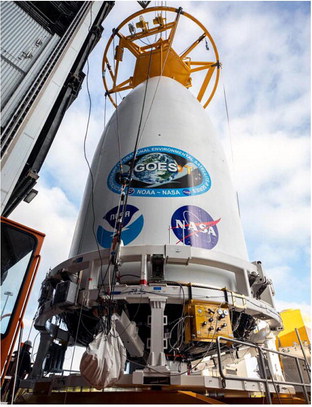
At press time, weather officials with Cape Canaveral Space Force Station’s 45th Weather Squadron were predicting a 70 percent chance of favorable weather conditions for the March 1 launch of the National Oceanic and Atmospheric Administration’s Geostationary Operational Environmental Satellite-T (GOES-T) satellite.
A collective effort between NASA and NOAA, GOES-T was scheduled to launch aboard a United Launch Alliance Atlas V 541 rocket from Canaveral Space Force Station’s Space Launch Complex 41 at 4:38 p.m. EST. According to a press release from NASA, GOES-T will help meteorologists observe and predict local weather events, including thunderstorms, tornadoes, fog, hurricanes, flash floods and other severe weather.
National Weather Service Glasgow Warning Coordination Meteorologist Patrick Gilchrist told the Northern Plains Independent that the team at the regional NOAA hub is looking forward to seeing what the satellite can do.
“It’s always exciting to get new technologies to help us fulfill our mission for the people of northeast Montana,” said Gilchrist. “The current GOES West satellite has problems with a cooling system that makes some of the data unusable at certain times of the year. GOES-T has improvements that will prevent such problems and will provide a consistent and full data suite. Eventually GOES-T will replace the current GOES-West satellite.”
In anticipation of the projected launch, NASA will provide coverage of the prelaunch and launch activities. Live launch coverage will begin at 4 p.m. on NASA Television, the NASA app and the agency’s website, nasa.gov.
“Currently, we are planning a virtual watch party at our office so we can cheer on the new satellite,” said Gilchrist. “It’s kind of a tradition for us as we also held launch parties back in 2016 and 2018 when GOES-R and GOES-S were launched.”
According to Gilchrist, there will be delays in receiving the first imagery from the satellite, regardless of launch date. “While the satellite is expected to launch on March 1,” he said, “Weather Service forecasters won’t be able to see the first imagery until May as there is a lengthy acclimation and start up timeframe. By July, the full data suite will be flowing.”