Dems Fahlgren, Sundheim Run For HD29
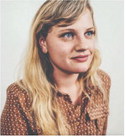
Tess Fahlgren of Glasgow and Rachel Sundheim of north Brockton are the two Democratic candidates for the Montana House District 29 position.
The district includes Glasgow, Scobey, Flaxville, Outlook, Plentywood, Medicine Lake and Froid. The primary will occur on June 2 and the general election will occur on Nov. 3.
Candidates answered the following questions from this newspaper..
1. Why did you decide to run for the House 29 position?
Fahlgren: When we have to vote between two Republicans, it doesn’t feel like we truly have options. I wanted to see better representation, so when a Democratic legislator encouraged me to run, I felt that it was my responsibility to show up for my community.
Sundheim: To be perfectly honest, I did not seek out running for the House 29 position on my own. I was introduced to a group of fellow Montanans holding o_ce who not only encouraged me to run, but truly inspired me with their own work in shaping Montana today. Their dedication made me realize this is something I can contribute to. 2. Describe your background and experience.
Fahlgren: I was born in Glasgow and graduated from GHS in 2009. I have a BA in English from University of Montana and an MFA in creative writing from the University of Minnesota. Over the years I’ve taught art and creative writing in every kind of classroom from Hutterite colonies and one-room schoolhouses to the MSU-B campus. In 2021 I moved back home to Glasgow, got married, and spearheaded the eort to build Siding 45 Skatepark. These days I volunteer for my community, work cows with my dad, and work with a small team to update older buildings in downtown Glasgow.
Sundheim: My background isn’t political, it’s real life. I’ve worked in a variety of industries, including food service, custodial work, visual art, insurance, education and agriculture. Each industry oered a unique experience and connection to a variety of people in our communities. I don’t come from a political family or hold a degree of any kind, and I think that’s exactly what we need: someone who lives the same life as the people they represent.
3. What do you feel are the key issues facing Montana and your house district?
Fahlgren: The fight for Medicaid expansion illuminates the larger issue of growing right-wing extremism. The Montana Republican party is embracing an agenda that would weaken rural hospitals, using misinformation and scapegoats to convince Montanans to vote against their own interests. Now more than ever we need integrity, honesty, and bipartisan cooperation.
Sundheim: The issues I feel strongly about are rural healthcare, agriculture and education – and they are all closely connected. When families sometimes have to drive hours to see a doctor or even further for a specialist, when farmers are barely hanging on due to drought, low commodity prices, and high input costs, and when local schools cannot find teachers/support sta while enrollment continues to decline – this is hollowing out our communities and continuing to contribute to the ‘ghost town’ eect that we still see happening in Northeast Montana.
4. Do you have any opinion of how to improve the health care system for Montanans?
Fahlgren: Relatively small adjustments could improve access to mental healthcare. For example, Medicaid dictates that patients be transported in an ambulance, creating obvious issues if a patient needs to be transferred to a mental health facility across the state. A bill to amend that would have a huge impact. On a larger scale, I’d like to see improved systems for individuals in mental health crises.
Sundheim: Montana’s biggest healthcare challenge is access, in my opinion. In northeast Montana, many of us drive an hour or sometimes longer to see a primary care physician, and seeing any specialist outside of primary care is a challenge, to say the least. Mental health and substance/addiction services are few and far between. Although telehealth has grown and made progress, there are still unmet needs. We need to look at ways to close or shorten these gaps- healthcare should not be a luxury.
5. What were you the most disappointed in about the Montana Legislature in the past session?
Fahlgren: One small example of a larger issue was the outcome of a common sense Right to Repair bill. It would have mandated corporations provide resources for farmers and ranchers to repair their own implements, but was killed in committee. Our legislators need to vote for Montanans, not corporations.
Sundheim: I wouldn’t say I was deeply disappointed in any one thing, but it was more noticeable what didn’t happen. Rural healthcare/ mental healthcare access, education funding/teacher retention and support for small agricultural producersthese are all issues that I felt didn’t get the attention they deserved.
6. How have you proven that you can work with others?
Fahlgren: I am an open-minded hard worker with a diverse background and broad community. Since my first job at 14, I’ve been everything from a waitress to a bookseller. I’ve taught thousands of kids and adults in over two hundred schools. With a partner, I put on two Montana Book Festivals and in just two years I led a team to fund and build a skatepark in Glasgow. I believe in listening to others’ perspectives in order to work together toward positive change.
Sundheim: I believe collaboration begins with transparency- I’m upfront about where I stand, which tends to fall in the middle rather than strictly along party lines. That makes it easier to find common ground across the spectrum. When something doesn’t go right, my instinct is to ask, ‘How can we make this better to move forward?’ rather than assign blame. And transparency means holding myself accountable too- acknowledging my own mistakes and treating every challenge as a chance to grow.