Fort Peck Salmon Spawn Wraps Up For The Year
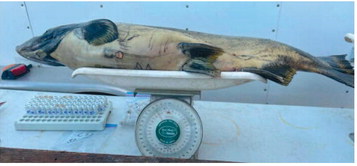
Fish Wildlife & Parks Fort Peck hatchery and Region 6 fisheries staff completed chinook salmon spawning operations this past week by collecting a total of 763,102 eggs.
While less overall chinook salmon were collected in 2026 compared to the last couple of years, salmon collected in 2026 were significantly larger than last year.
Females collected this fall averaged 20.2 pounds compared to 15.1 pounds in 2025. The larger average size of chinook salmon this year is likely attributed to an ample forage base of cisco in Fort Peck Reservoir and the fact that the majority of fish returning in 2026 were 4 years old. The specific ages of spawned fish will be determined this winter by analyzing their otoliths, which were removed after the fish was spawned.
In general, the larger a chinook salmon female is, the larger her eggs are. She will have more eggs than a smaller female. This led to filling the hatchery’s capacity of incubating eggs with less overall adults used and eggs collected when compared to 2025. Females this fall averaged 3.7 pounds of eggs per female compared to 2.6 pounds per female in 2025. Similarly, females collected this year averaged 5,156 eggs compared to 4,662 eggs per female last year.
The salmon eggs that have recently been fertilized by the Fort Peck hatchery staff are called green eggs, which are currently in incubation jars with running water over them. As these green eggs develop, hatchery staff will continue to observe egg development. Once the eggs develop eyes in the eggs (called eyed eggs), picking will commence. Picking eggs is removing the dead/non-fertilized eggs from the live eggs to keep bacteria and fungus from negatively impacting healthy eggs.
Hatchery staff will also calculate the number of live eggs to determine the estimated survival to hatched sac fry. Sac fry are fish that have a visible egg sac, that is their food for fish development and growth. After the egg sac is used up, these fish will be placed on specialized feed program for continued development, until they are released back into Fort Peck Reservoir next spring.