Record-High Diesel Prices Put Pressure On Ag Industry
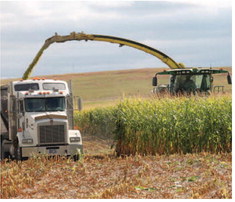
Record-high diesel prices are adding another layer of expense for farmers, ranchers, truckers and local governments across N
ortheast Montana, with the effects reaching well beyond the fuel pump.
On Sept. 4, GasBuddy reported that the national average price of diesel reached an all-time high of $5.85 per gallon, surpassing the June 2022 record of $5.82. The September 2026 average was more than $2 per gallon higher than the $3.70 national average recorded in September 2025. Since then, diesel prices have continued to rise.
Patrick De Haan, head of petroleum analysis at GasBuddy, said diesel’s influence extends throughout the economy because it powers much of the nation’s transportation, agricultural and construction equipment.
“Diesel is the fuel that moves the economy, and when diesel prices reach record levels, the impact extends far beyond the transportation sector,” De Haan said. “Higher diesel prices impact consumers as rising supply chain costs increase the price of groceries, household goods, deliveries, and countless other products Americans rely on every day.”
GasBuddy attributed the recent increase to volatility in global energy markets, including geopolitical tensions, supply chain disruptions, higher oil prices, reduced refining capacity abroad and tight global inventories.
For northeast Montana producers, however, higher diesel prices are hitting much closer to home.
The timing is particularly difficult for farmers harvesting crops and ranchers hauling hay, harvesting feed, and preparing for winter. In addition to higher fuel costs, producers face increased fertilizer expenses. At the same time, some northeast Montana crops have seen reduced yields after extreme heat and dry conditions earlier in the growing season.
At Pro Co-op in Scobey, general manager Tanner Trower said diesel sales have increased compared with both the previous quarter and the same period last year. That increase, he said, is primarily because producers across the cooperative’s trade territory are harvesting a much larger crop.
Higher fuel costs, however, are affecting what producers can spend elsewhere.
“Higher diesel prices have affected sales of our other products and services because fuel is a necessary expense that cannot be avoided,” Trower said. “As more of a producer’s budget goes toward diesel, there is less available to spend on other products and services.”
Trower said some growers are responding by reducing their use of convenience services such as fertilizer spreading and chemical spraying.
“These services save time and are convenient, but when diesel prices are high, some growers choose to do the work themselves to reduce expenses,” he said.
Despite the price increase, Trower said Pro Co-op has not experienced diesel supply problems in its area.
“As of now there have been no supply issues, and I have not been notified that this geography will have any supply issues going into winter,” he said.
Trower said most of the current price increase is being driven by the wholesale cost of the fuel itself, rather than transportation, taxes or distribution expenses.
“The majority of the price increase is driven by the wholesale cost of the fuel itself,” he said. “Transportation, taxes, distribution, and other operating costs make up a much smaller portion of the final price.”
The high prices also challenge fuel suppliers, which must maintain enough inventory to meet customer demand without taking on excessive risk if prices suddenly fall.
“We are trying to balance having an adequate fuel supply for our customers while being careful not to build up too much high-priced inventory,” Trower said.
For producers, the impact extends through the entire agricultural supply chain.
“Producers are feeling the impact not only on the input side through higher fuel and fertilizer costs, but also on the cost of getting their grain to market,” Trower said. “With the long distances our producers travel to deliver grain and the distance we are from fertilizer manufacturing facilities, transportation costs can have a significant impact throughout the entire supply chain.”
Bainville farmer and rancher Dana Berwick said the current prices are affecting producers at a time when many are already using large amounts of fuel.
“Everybody’s trying to finish up harvest, haul hay and chop corn silage,” Berwick said. “The fuel is double what anyone budgeted.”
Berwick said even producers who purchased fuel in advance have not necessarily been protected from the increase. Many farmers and ranchers typically pre-buy fuel in the spring, when they establish their seasonal needs.
“This spring it didn’t look like we were going to use much fuel because it was so dry,” Berwick said. “So I think even those that I’ve talked to that did pre-buy and take delivery on fuel are out because it turned off and rained in June.”
For Berwick, the price has reached a point where it can influence whether a producer takes on additional work. “I was talking to a guy the other day that was talking about going out and doing some more haying that became available to him and said for the price of fuel, he just thinks he’s going to skip it,” Berwick said. “I would say that he probably would have if fuel were $3, but, approaching $6, it’s significant.”
Haying and feed transportation are particularly fuel-intensive activities. Berwick said his operation currently uses a chopper that consumes about 300 gallons of fuel a day, along with trucks burning 60 to 70 gallons a day and a tractor using about 100 gallons a day.
“When you think about that, just add $3 to all those gallons,” Berwick said. “It’s a significant expense, but it’s not anything you can make any management decision on because you can’t leave the corn standing in the field. You have to harvest it.”
While feeding cattle also requires fuel, Berwick said the larger expense comes from getting hay and feed harvested, hauled and stored.
“Transporting it home will sure make a difference,” he said. The cost of transporting hay also can affect both buyers and sellers. Berwick said a producer may be able to sell hay at a particular price, but the higher cost of getting it to the buyer can change the economics of the transaction.
“It’s definitely going to change the demand,” he said.
The same problem applies when ranchers haul cattle to distant markets, sale barns or processing facilities. Berwick said there is little opportunity to avoid those transportation costs because cattle still have to reach their destination.
“It’s just taking profit away or adding expense,” he said.
Berwick also noted that cattle prices have not risen along with diesel costs.
“No, the price of cattle has actually been moving inversely to diesel,” he said.
Higher fuel prices are also competing with other ranch expenses. Berwick said fertilizer costs have also increased, adding another burden for producers planting forage crops for hay or grazing.
“If you were planting a winter forage crop for hay or grazing or whatever for next year, your inputs on that would probably not double what they were this spring, but half again higher,” he said.
When additional money goes toward fuel, Berwick said ranch families may have to postpone other expenditures.
“It cuts your cash flow down,” he said. “When you’re spending that much more money on fuel, I mean, it comes from other things.”
Those choices can involve postponing fence construction, corral improvements or water-system work, or reducing spending on items such as mineral and salt.
Berwick said a planned improvement can become an emergency repair when cash is diverted to fuel.
“I plan to replace a half mile of fence a year turns into, I guess, we’ll just put a post in,” he said.
The impact could eventually reach decisions about livestock numbers, particularly for ranchers who purchase hay.
“I do think there will be some cattle go to market because of the cost of transporting the feed,” Berwick said. “It was high when fuel was in the 4s and now in the 6s. It’s a bunch. It’s significant.”
The transportation industry is experiencing the same squeeze.
Wolf Point trucker Wade Bowman, owner and operator of Diamond Lines Transportation, hauls cattle and grain throughout the region and to destinations across the Midwest. His cattle hauling takes him to states including Nebraska, Wyoming, Minnesota, North Dakota and Iowa, and occasionally as far as Texas.
Bowman said his trucking operation has been hit particularly hard because freight rates did not initially keep pace with the increase in diesel.
“At the beginning of the year when diesel was at $3.50, we were making $5.15 a mile,” Bowman said. “And they haven’t given us any raises with this fuel jump, even where it is now.”
The result, he said, was that little money remained after paying the operating expenses required to keep his truck on the road.
“I was actually going backwards. I wasn’t making any money. I was actually losing money,” Bowman said.
Truck maintenance and tires can quickly consume the remaining income from a load. Bowman said that as fuel costs climbed, he began using savings set aside for the business.
“At the beginning of the year, I had a decent little savings account set up, and now it’s all gone,” he said.
Bowman began turning down some loads to avoid hauling freight that did not cover his costs. Eventually, he said, trucking rates increased by 70 cents per mile, but he believes the adjustment came too late to offset the fuel increase.
“Even with this raise we got, it took them so long to get to it that fuel jumped up,” Bowman said.
The difference in fuel expense can be substantial on a single agricultural load. Bowman said hauling grain to Lewistown and Great Falls, which previously cost about $450 in diesel, now costs about $850.
“It’s not making anybody very happy,” he said, noting that farmers understand the higher charges but are also dealing with increased expenses themselves.
Bowman said local grain hauling during harvest has helped keep his operation moving, but that seasonal work is declining as harvest winds down.
“That’s kind of what kept me going was that I was able to haul grain for farmers,” he said. “But that’s going away, so I’m trying to search more for that.”
For a rural trucking operation, refusing loads isn’t a long-term solution.
“You can’t do it for very long,” Bowman said. “We still have bills at the end of the month. It’s hard to turn down too much work because you still need to pay bills.”
Higher diesel prices also affect local government.
Roosevelt County Commissioner Robert Toavs said the county anticipated higher fuel expenses when preparing its budget, but the current increase has exceeded expectations. “We budgeted for an increase over last year’s fuel costs, but these are unforeseen fuel price increases,” Toavs said.
The county road department and sheriff’s office depend heavily on fuel. A difficult winter with heavy snowfall could put additional pressure on the road department’s fuel budget.
“We hope we don’t have a bad snow year, which will drastically challenge the county road department’s fuel budget,” Toavs said.
At the same time, the sheriff’s office cannot simply reduce its fuel consumption when prices rise.
“The sheriff’s office’s budget is also heavily affected by fuel prices,” Toavs said. “But both entities have to keep running, and fuel prices can’t dictate day-to-day operations.”
Toavs said the county may need to amend its budget later in the fiscal year to account for higher fuel costs.
“We may have to amend budgets in the spring once we get closer to our fiscal year end,” he said.
Because the county’s fiscal year runs from July 1 through June 30, the full effect of a winter fuel increase may not become apparent until the spring.
“Lower fuel prices in the spring will not correct the budget shortfall that may occur this winter if we have a bad snow season,” Toavs said. “We would still need to do a budget amendment to give us enough budget to continue business as usual through the end of the budget year.”
For farmers, ranchers, truckers and other rural businesses, the concern is not simply the price displayed on the pump. It is how that price moves through every part of an operation where equipment must run, products must be transported, and distances cannot easily be shortened.
Trower said producers are feeling that pressure throughout their operations.
“At normal diesel prices, fuel is one of the smaller inputs as a percentage of their overall farm or ranch expenses,” he said. “At today’s inflated prices, however, fuel represents a much more significant cost and is putting additional pressure on already tight margins.”
For northeast Montana producers accustomed to long distances and limited alternatives, the record price of diesel is another cost they must absorb somewhere in the operation.
As Berwick put it, “If you just double the price of anything you’re doing, it’s tough regardless of your business.”